Digital heritage engineering · Graz, Austria

Digital heritage, engineered to last.

I build archives and memorial platforms for universities, museums and heritage institutions — and I stay for the part after launch: tests, operating costs, training.

I am senior developer on the new version of GAMS, the University of Graz’s certified archive; DERLA, Austria’s digital memorial landscape, and MEMOR, the City of Graz’s memorial book, are built on it.

The system should outlive the project that paid for it.

Typical engagements project work technical review and modernisation training series

Portrait of Sebastian David Schiller-Stoff

Sebastian David Schiller-Stoff

Senior Developer (Full-Stack Engineer) · Department of Digital Humanities, University of Graz

Trained in art history, history and digital humanities. Senior developer on the new version of GAMS, the CoreTrustSeal-certified archive behind DERLA, MEMOR, LIPFA and CANTUS.

Affiliation

University of Graz

Department of Digital Humanities

System

GAMS

OAIS · CoreTrustSeal (2019) · CLARIN B

Recognition

Austrian State Prize 2024

Awarded to the DERLA project

Procurement

GLN 9110032223467

Registered IT services · GISA 34945216

Storymap · DERLA

The memory landscape

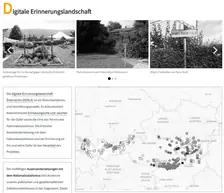
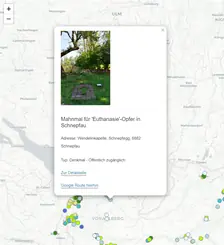
DERLA’s open records, drawn at national scale: plaques, stones, monuments and sites of terror across Austria. A map of remembrance is not a neutral backdrop; this one counts what is marked, in which form, and since when.

  • 4,393

    records

  • 232

    sites of terror

  • 2,765

    since 2000

Open the storymap Turn the globe

4,161 memorial markers 232 sites of terror

Documented places of remembrance in Austria 4,393 records, one per documented place: 4,161 memorial markers and 232 sites of terror. Records at the same position overlap at this scale. The distribution is densest in Vienna and along the eastern edge, and sparse in the western Alps. Exact positions are approximate.
Source: DERLA, University of Graz · CC BY-NC 4.0 · 3,877 records carry a date; positions approximate at national scale.

Storymap · MEMOR

The last addresses

MEMOR — the City of Graz’s digital memorial book — records 812 people persecuted under National Socialism, and a last voluntary address for 808 of them. Here that register is drawn at city scale: 604 distinct addresses, concentrated in Gries, Lend and Jakomini, far fewer beyond them.

  • 812

    in the register

  • 604

    last addresses

  • 247

    died at Hartheim

Open the MEMOR storymap

604 last addresses 584 visible positions at this scale

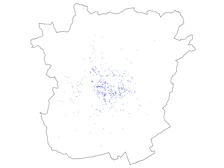
Last voluntary addresses of people persecuted in Graz 604 last voluntary addresses of Graz residents persecuted under National Socialism, drawn inside the present-day city boundary. Positions overlap at this scale: they collapse to 584 visible points. Addresses are today's geocodes of historical addresses; no names are shown.
Source: MEMOR, City of Graz · dataset CC BY 4.0 · DOI 10.5281/zenodo.20510043 · boundary © OpenStreetMap contributors, ODbL. 604 addresses recorded for 808 people, all against today’s geocodes of historical addresses; no names are shown.

Two remembrance platforms, one method: DERLA at national scale, MEMOR at the scale of a city. Both are drawn from their platforms’ public data, and both leave the gaps in the record visible. Both are built on GAMS, the archive I help develop. The same DERLA extract also turns as the memory globe.

Selected outcomes

Work with public impact.

A national memorial landscape, a city memorial book, and the certified archive behind both. Each entry states my role, the scope, the result and where to verify it.

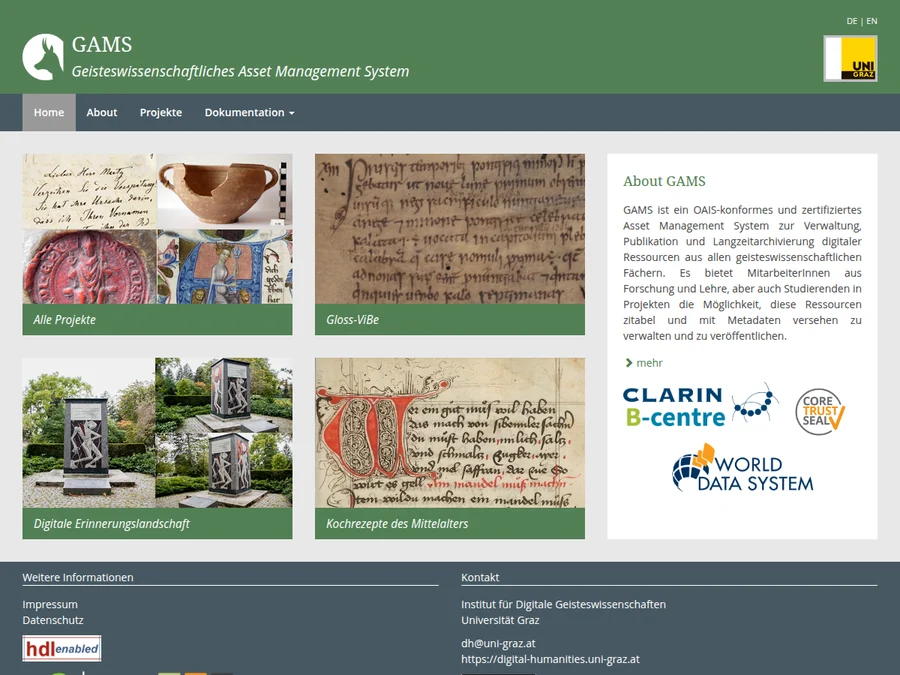
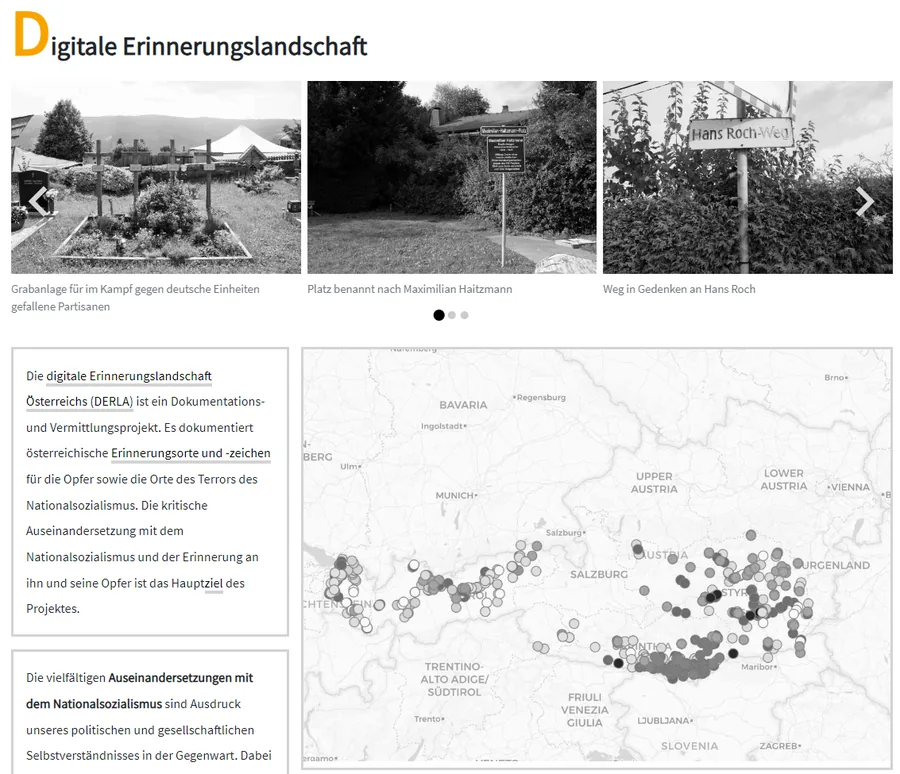
Screenshot of the DERLA digital memorial landscape
Digital Humanities 2019—2025

DERLA: Digital Memorial Landscape

The national documentation of memorial sites and sites of terror under National Socialism, run by ERINNERN:AT, the Centrum für Jüdische Studien and ZIM at the University of Graz.

Role

Full-stack development

Scope

GIS · archive · search

Result

4,393 records · 232 sites of terror

What I contributed

  • Developed the full-stack application
  • Implemented the GIS mapping for memorial locations
  • Built the search and filtering over the records
  • Integrated multimedia content with the archive
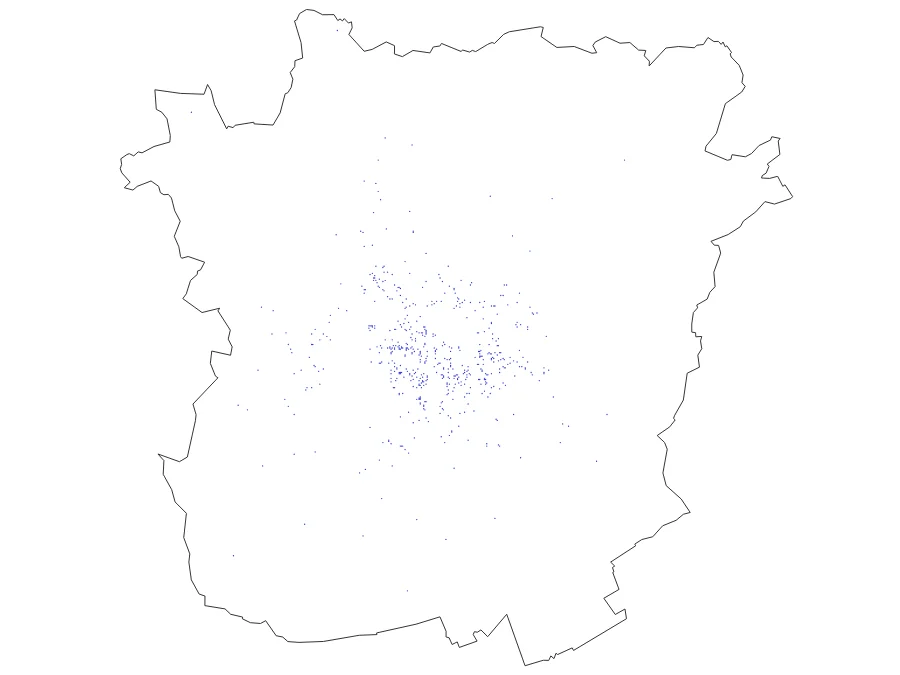
Map of Graz with 604 last voluntary addresses of people persecuted under National Socialism, drawn inside the city boundary
MEMOR’s city map: the 604 distinct last addresses recorded for 808 people, drawn from the open dataset. Points are today’s geocodes of historical addresses; no names are shown. Boundary © OpenStreetMap contributors, ODbL.
City of Graz Open dataset 2026

MEMOR: the digital memorial book of Graz

The City of Graz’s digital memorial book, documenting 812 people persecuted under National Socialism; 808 of them have a last voluntary address, recorded as 604 distinct addresses. The open dataset is co-authored with Gerald Lamprecht.

Role

One of five MEMOR authors · co-creator of its dataset

Scope

Dataset · register data · GAMS

Result

812 people · 604 distinct addresses · CC BY 4.0

Evidence

Visit MEMOR

What I contributed

  • Co-created the open dataset and prepared it for publication
  • Prepared the register and last-address records for reuse
  • Built the public data study from the project’s open records
  • Published the dataset with a DOI for verification
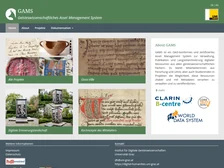
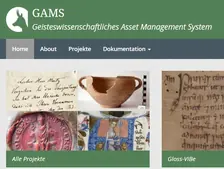
Screenshot of the GAMS homepage with project collections and the About panel showing the CLARIN B-centre, CoreTrustSeal and World Data System marks
GAMS at the University of Graz: project collections and the repository’s trust marks.
Digital preservation Research infrastructure Trusted since 2014

GAMS: the university’s certified archive

The University of Graz’s OAIS-compliant asset management system for publishing and long-term archiving humanities research data — the repository behind DERLA, MEMOR and the university’s editions.

Role

Senior developer · current version

Scope

Repository · metadata · search

Result

CoreTrustSeal since 2019 · CLARIN B · WDS member

What I contributed

  • Senior developer on the new GAMS version
  • Repository workflows, metadata and search
  • Interfaces and APIs for project collections
  • Built the end-to-end test tool that checks the platform

Services

What you can commission.

Infrastructure that lets collections and research data be published, searched and preserved — and stay operable. Technical review, operating-cost estimates and handover are part of the work.

01

Research platforms

Turn research requirements into dependable services.

Full-stack applications, APIs and data pipelines built with React, Spring Boot and modern JavaScript — designed for maintainability and long-term use.

Outputs Web applications · APIs · data pipelines

Technologies React · Spring Boot · JavaScript · TypeScript

02

Digital archives

Publish and preserve collections with durable access.

I am senior developer on the new version of GAMS, the university’s OAIS-compliant archive, CoreTrustSeal-certified since 2019.

Outputs Repository workflows · metadata · search

Technologies OAIS · Fedora/Cirilo · IIIF · metadata

03

Linked data & editions

Make complex sources structured and discoverable.

I model cultural heritage as structured, connected data: TEI editions, RDF graphs, prosopographies and semantic search interfaces that reward curiosity.

Outputs TEI editions · RDF graphs · semantic search

Technologies TEI · RDF · Linked Data · GIS

04

Responsible AI workflows

Improve research workflows while retaining provenance.

I bring AI into scholarly work carefully: coding assistants, agent workflows and retrieval pipelines that keep researchers in control of their sources.

Outputs Retrieval pipelines · coding assistants · agent workflows

Technologies LLM · NLP · evaluation · provenance

Start a project

How I work

From research question to durable system.

A delivery path that keeps scope, provenance and maintenance visible from the first workshop to handover — so the system survives the funding period.

01

Frame

Clarify users, research questions, constraints and success criteria.

02

Model

Define the content and data model, provenance, interfaces and architecture.

03

Build

Deliver iteratively with testing, documentation and stakeholder review.

04

Sustain

Plan for maintainability, handover, preservation and long-term access.

Sustain is the part I stay for: automated end-to-end tests, an operating-cost estimate, and training for the team that takes over. The method comes from my MA thesis on software testing in the digital humanities, and the end-to-end test tool that checks GAMS.

Work

Projects and contributions.

Archives, editions, research tools and publications — built with colleagues across the humanities and computer science.

Filters

23 projects

Training

Workshops, talks and publications.

Training for the teams who run the system after the project ends, plus the written record of the method. The record runs from a 2021 presentation on long-term archiving ecosystems to the 2026 DHd presentation on AI assistance in GAMS, and includes the Data Steward (2024) and Data Librarian (2025) programmes.

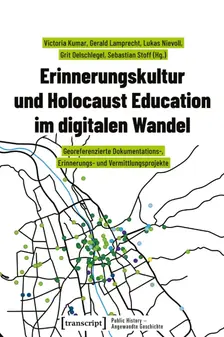
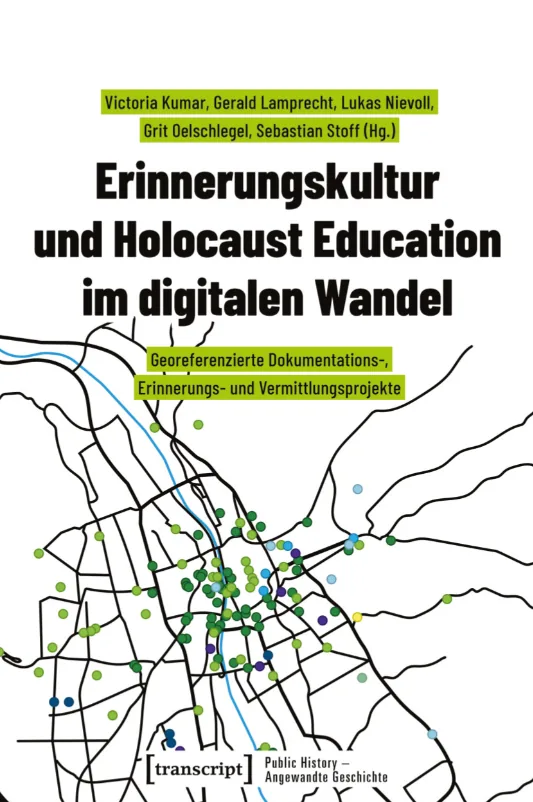
Cover of Erinnerungskultur und Holocaust Education im digitalen Wandel

Edited volume · 2024

Erinnerungskultur und Holocaust Education im digitalen Wandel

A collected volume examining how remembrance of National Socialism and the Holocaust is evolving alongside digital technologies. Contributors analyse geo-referenced web applications, deep mapping and the growing role of digital Holocaust education.

Part of the editorial team · Articles on GAMS, DERLA and explorative search

View at transcript

Dataset · 2026

MEMOR — Das Digitale Gedenkbuch der Stadt Graz

The research dataset behind MEMOR, the City of Graz’s digital memorial book: 812 people persecuted under National Socialism, their last voluntary and forced addresses, and the places of death recorded for 668 of them. Published openly for reuse and verification.

Co-author of MEMOR · Co-creator of its dataset

View the dataset on Zenodo

Selected writing · 2026

Five records, read again

Five Zenodo records — a workshop, a course, two conference papers and an agent lesson — read again with what still holds and what I would change.

Read the five readings

Presentation · DHd 2026 · 23–27 Feb 2026

Wo ist der KI-Sweetspot? Nutzen und Herausforderungen für die Einbindung von KI-Assistenzsystemen ins Geisteswissenschaftliche Asset Management System (GAMS)

Open on Zenodo

Conference abstract · 26 Sep 2025

Kann LLM generierter Code FAIR sein? Herausforderungen für das Forschungsdatenmanagement

Open on Zenodo

Workshop slides · 1 Jul 2025

GIS integration in digital research archives: challenges and solutions using GAMS

Open on Zenodo

Workshop slides · 15 May 2025

Software Architecture for Data Librarians

Open on Zenodo

Workshop slides · 10 Mar 2025

Introduction to AI-Agent-Engineering

Open on Zenodo

Presentation · DHd 2025 · 5 Mar 2025

Der Einfluss von AI-Pair-Programmers auf die Digital Humanities: Potentiale und Limitationen

Open on Zenodo

Workshop · DHd 2025 · 4 Mar 2025

Fortgeschrittenes Prompt und AI Agent Engineering für wissenschaftliche Textproduktion

Open on Zenodo

Workshop · 28 Nov 2024

KI gestützte Programmierung in den Digitalen Geisteswissenschaften

Open on Zenodo

Workshop · 21 Nov 2024

AI coding assistants (advanced)

Open on Zenodo

Workshop · 12 Sep 2024

AI coding assistants

Open on Zenodo

Article · 1 May 2024

Various articles for the KONDE Weißbuch, e.g. “Software Architecture” and “Software Engineering”

Open on GAMS

Presentation · 15 May 2024

IDE-Integration of GitHub Copilot: Jetbrains IDEs

Open on Zenodo

Conference abstract · 21 Feb 2024

Project Overhaul und Refactoring der digitalen Edition der „Urfehdebücher der Stadt Basel“ mithilfe von GPT-4 und LLM

Open on Zenodo

Workshop · 22 Jan 2024

Legacy code and copilot technologies: AI-supported software maintenance

Open on Zenodo

Workshop · 4 Dec 2023

Copilot technologies in the digital humanities

Open on Zenodo

Conference paper · FORGE 2023 · Sep 2023

Organisation bestimmt Technik: Persistenz und Veränderung in Infrastrukturen zur langfristigen Sicherung von Forschungsdaten

Open on Zenodo

Presentation · 21 Jun 2023

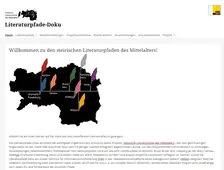
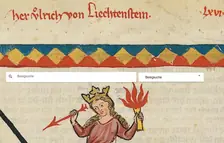
Literaturpfade des Mittelalters

Open on GAMS

Presentation · 30 Jun 2022

Digital Mapping – Digital History: DERLA – Digitale Erinnerungslandschaft

Open on Zenodo

Presentation · 13 Jun 2022

Werkzeuge und Architekturen für digitale Editionen: React als Frontendwerkzeug

Open on Zenodo

Final presentation · 2022

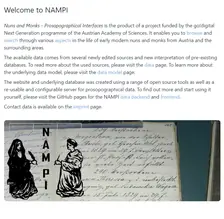
Abschlusspräsentation des ÖAW-Projekts „Nuns and Monks – Prosopographical Interfaces (NAMPI)“

Open on Zenodo

Conference presentation · 9 Sep 2021

A long-term archiving and dissemination ecosystem for humanities research data

Open on Zenodo

Experience

Experience and education.

Since 2017 I have built research software at the University of Graz — from frontend engineering to archive infrastructure.

Current position

Senior Developer (Full-Stack Engineer)

DDH Department of Digital Humanities, University of Graz

Senior developer on the new version of GAMS, the digital archive at DDH Graz. Responsible for designing and implementing critical digital infrastructure and ensuring the seamless evolution of research software systems.

Full-stack development · Digital archives · Research software

2022present

Professional experience

Freelance Software Engineer

Graz, Austria

Building robust, scalable web applications and AI-powered tools that solve real research and business problems.

Digital infrastructures · LLM & agents · Web development · Spring Boot · Java

schiller-stoff.github.io

Computational Research Engineer

DDH Department of Digital Humanities, University of Graz

Developed infrastructure, digital editions and teaching technology for memory preservation.

Digital infrastructures · Digital editions · Research software

Frontend Engineer

ZIM — Zentrum für Informationsmodellierung, University of Graz

Developed frontend solutions for digital humanities research projects.

React.js · Vue.js · jQuery · XSLT

IT Administrator

UNI-IT, University of Graz

Managed IT infrastructure and systems administration.

Active Directory · Microsoft software · Git

Digital Marketing Manager

Kunst und Antiquitätenhandel Stoff

Managed and operated the family business dealing with valuable antiques and art objects.

kunsthandelstoff.at

Education

MA Digital Humanities

DDH Department of Digital Humanities, University of Graz

Master’s degree

Thesis: Software-Tests in den Digitalen Geisteswissenschaften / Software Testing in the Digital Humanities. Open access via URN

MA Art History

University of Graz

Master’s degree

BA Art History

University of Graz

Bachelor’s degree

MA Historical Science

University of Graz

Master’s degree

BA Historical Science

University of Graz

Bachelor’s degree

Core competencies

Web development

  • React.js
  • Spring Framework
  • JavaScript
  • TypeScript
  • REST APIs

Digital preservation

  • OAIS
  • CoreTrustSeal
  • Fedora/Cirilo
  • IIIF

Software quality

  • Software testing
  • Test automation
  • E2E tests
  • CI

Research & AI

  • Digital archives
  • GIS
  • TEI
  • Linked Data
  • LLM & agents

Contact

Start a project.

Most engagements begin with a short conversation about the collection, the mandate and the deadline. A one-page brief is enough.

A useful first message

  • what the collection or system is
  • who it serves and what the funder expects
  • the deadline or funding period

I work alongside a full-time post at the University of Graz; commissioned work is contracted through the registered business named in the imprint.

Direct contact

Location

Wegenergasse 7/2/4
8010 Graz, Austria

Engagements

Project work · technical review · training

Response

Usually within a few working days

For roles and positions, write to the same address with the role title.

Your message is sent through Formspree. See the imprint for data-protection information. I usually reply within a few working days.

Legal

Imprint and data protection.

Information according to the Austrian E-Commerce Act and the disclosure obligations for this personal website.